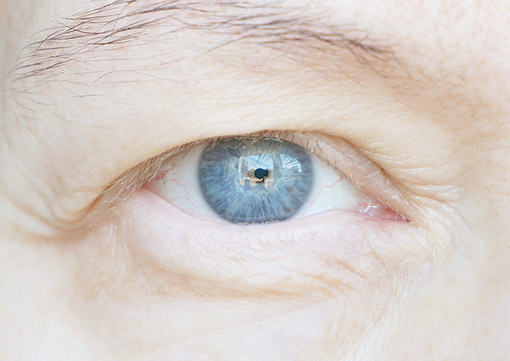
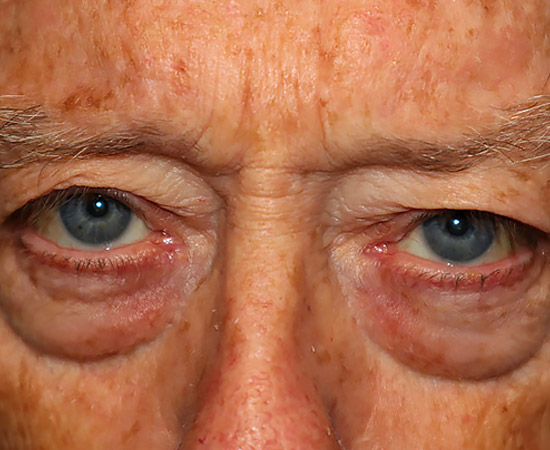
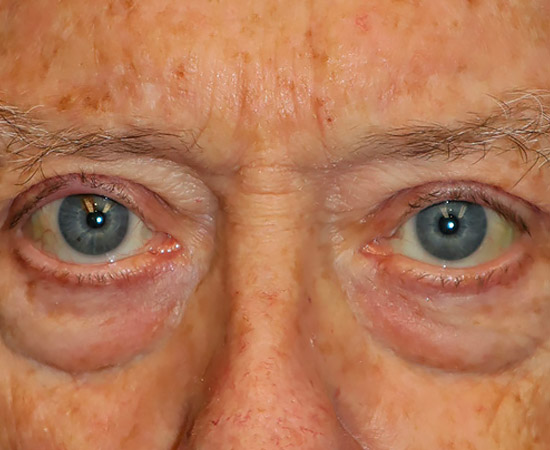
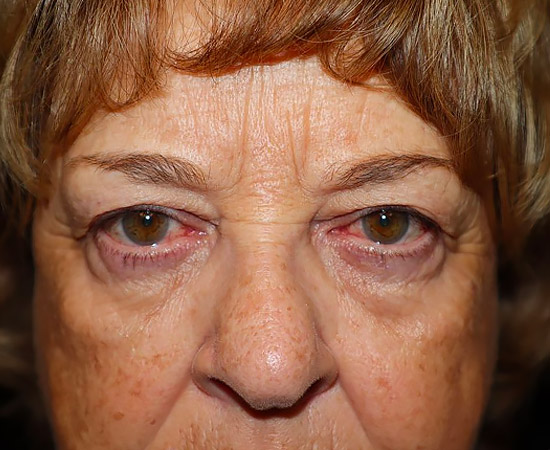
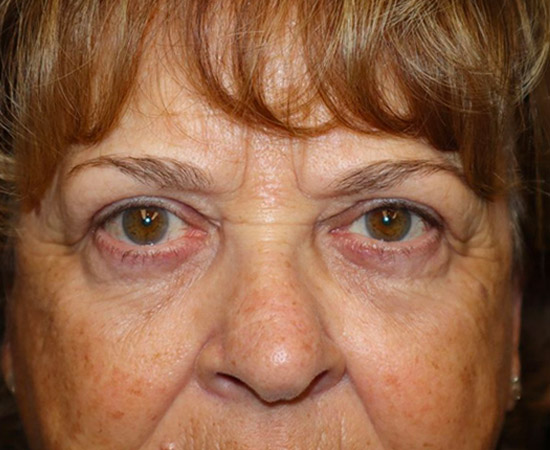
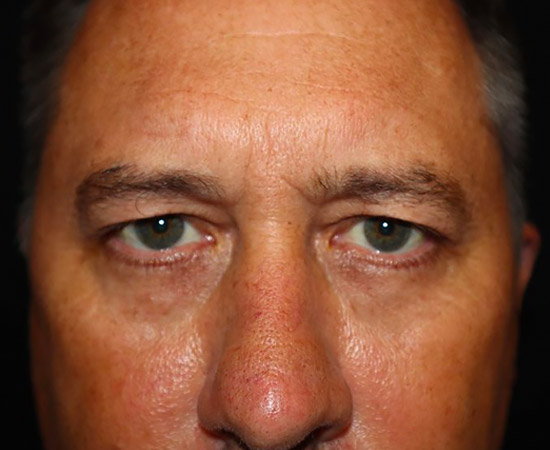
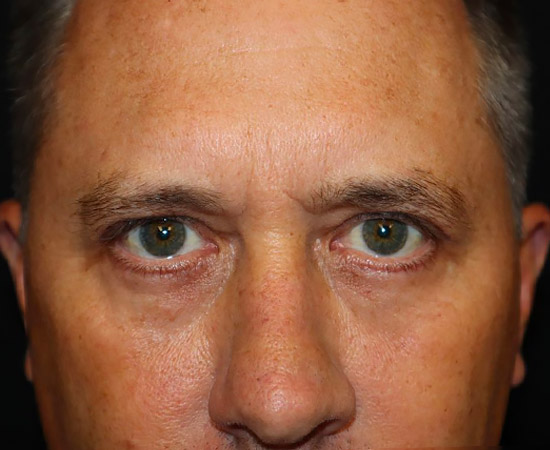
The upper lids can appear droopy due to excess skin. This can be functional if it affects daily activities like reading and driving by compromising peripheral vision. Peripheral vision will be objectively measured with automated visual fields and by clinical exam. Insurance companies have a certain rubric that must be followed for approval.
The procedure entails using a CO2 laser to remove excess skin and perform tailored contouring to debulk the orbicularis muscle, brow fat pad, and/or remove orbital fat for an improved lid contour without changing the shape of the eyes.
This is usually performed under local anesthesia, so that lid symmetry can be evaluated intraoperatively. It usually takes about 30-45 minutes to perform. This can be done in conjunction with lower lid blepharoplasty or upper lid ptosis procedure as well and periocular or full face and neck laser skin resurfacing.
This varies per patient, but about 80% of swelling decreases by month 1, and the residual 20% can take several months to resolve. The stitches placed usually dissolve in about 10 days to 2 weeks (sometimes non-dissolvable stitches are placed and are removed at week 1) and patients are usually seen at the following intervals postoperatively: 1 week, 1 month, 3 months. No bandages are placed after the procedure, but detailed instructions will be given about ice and head positioning to decrease swelling after the procedure.
As with any surgical procedure, there are certain risks associated with a lower blepharoplasty procedure, which Dr. Rosh will review at your consultation.

You may be a good candidate if you:
Blepharoplasty typically takes 30-45 min. It can be done in the office with local and oral sedation or with IV anesthesia in the office or hospital setting depending on the patient’s overall health.
The procedure is performed under local anesthesia with sedation or general anesthesia, so you will not feel pain during surgery. Mild discomfort, swelling, and bruising are common after surgery but can be managed with over the counter pain medication (ie. Tylenol) and cold compresses.
Most patients experience swelling and bruising for 1 to 2 weeks. You can usually return to light activities within a few days and resume normal activities within 10 to 14 days. Full healing may take several months.
Incisions are placed within the natural eyelid creases, making scars minimal and well-hidden. Over time, they fade significantly.
Results are long-lasting, often for 10-15 years or more. However, natural aging will continue, and lifestyle factors can affect longevity.
As with any surgery, risks include:
Insurance may cover functional blepharoplasty if drooping eyelids impair vision. A consultation and visual field testing can determine eligibility. Cosmetic procedures are typically not covered.
You can schedule a consultation with Dr. Rosh by calling 813 303 0123.
Schedule your individual
treatment plan today!
2022 Tampa Bay Times BEST of the BEST People’s Choice Awards.